Lunchbox ideas for sensory issues rely on predictable textures, separating ingredients to prevent cross-contamination, and prioritizing “safe foods” over nutritional variety during school hours to reduce anxiety. Effective strategies include using bento-style boxes to keep items distinct, maintaining specific temperatures with high-quality thermoses, and involving the child in low-pressure food selection to ensure autonomy.
Understanding Sensory Processing and Lunchtime
For children and adolescents navigating eating disorder recovery, particularly those with Avoidant/Restrictive Food Intake Disorder (ARFID) or Sensory Processing Disorder (SPD), the school lunch break represents a significant physiological and psychological hurdle. Unlike the controlled environment of the home, school introduces variables that can trigger sensory overload, making the act of eating nearly impossible.
When we discuss lunchbox ideas for sensory issues, we are not merely looking for recipes; we are looking for strategies that lower the barrier to entry for eating. The goal during the school day, especially within the context of eating disorder treatment in New Zealand, is often maintenance and energy stabilization rather than aggressive food exposure therapy. The school environment is rarely the appropriate setting for challenging fear foods due to the lack of parental support and the high social stakes.
Sensory aversions can manifest in three primary ways regarding food:
- Tactile: The texture of the food in the hands or mouth (e.g., slime, grit, mixed textures).
- Olfactory: Strong smells from one’s own lunch or a neighbor’s lunch.
- Visual: Foods touching each other, “broken” foods, or unexpected colors.
Navigating School Lunch Anxiety
Anxiety and appetite are physiological opposites. When a child is in a state of high anxiety (fight or flight), the digestive system slows down, making eating physically uncomfortable or inducing nausea. This creates a feedback loop where the dread of lunch causes physical symptoms that reinforce the refusal to eat.
How can we reduce the sensory load of the environment?
The cafeteria or playground is a sensory minefield. The noise, the chaotic movement, and the amalgamation of smells can overwhelm a child with sensory processing issues before they even open their lunchbox. To mitigate this, consider the following environmental modifications:
- Noise Cancellation: If the school allows, noise-canceling headphones can be a game-changer. By dampening the auditory chaos, the child can focus better on the task of eating.
- Alternative Seating: Work with the school to identify a quiet space. This might be a library, a specific classroom, or a quieter corner of the grounds. In New Zealand schools, where outdoor eating is common, finding a wind-sheltered, quiet bench away from the rugby field can help.
- Time Extensions: Children with sensory issues often eat slower because they must inspect and process every bite. Rushing leads to choking anxiety or abandonment of the meal. Advocacy for extended eating time is crucial.
Temperature and Texture Considerations
One of the most common complaints regarding school lunches is the degradation of texture and temperature between 8:00 AM and 12:30 PM. For a neurotypical child, a slightly soggy sandwich or lukewarm yogurt is an annoyance. For a child with sensory issues or ARFID, it renders the food inedible.
Why is temperature consistency vital?
Predictability is safety. If a child expects a food to be cold and crisp, and it arrives warm and limp, the sensory violation can trigger a gag reflex. This is why insulation technology is a medical necessity, not a luxury, in this niche.
- The Thermos Strategy: For children who prefer hot foods (often easier to digest and more comforting), a high-quality stainless steel food jar is essential. Preheat the thermos with boiling water for 10 minutes before adding the food to ensure it stays hot, not lukewarm. Safe foods like plain pasta, rice, or chicken nuggets often maintain their texture better when kept hot.
- The Cold Pack Strategy: Use multiple ice packs for items that must stay firm, like cheese, yogurt, or fruit. Condensation can be a texture killer, so wrap ice packs in a tea towel or paper towel to prevent moisture from making other items soggy.

Managing Texture Degradation
Texture mixing is a primary trigger for sensory-based food aversion. A sandwich that gets squashed creates a “mixed texture” (bread mashed into filling) that can be repulsive. To combat this:
- Deconstruct the Meal: Instead of a sandwich, pack the components separately. Bread cut into squares, meat rolled up, and cheese cubes. This allows the child to control the ratio and ensures textures stay distinct.
- Prioritize Dry/Crunchy: Dry foods (crackers, pretzels, freeze-dried fruit) are shelf-stable and texture-consistent. They do not change over time. These are excellent “bridge foods” to ensure caloric intake when other textures fail.
Specific Lunchbox Ideas for Sensory Issues
When curating lunchbox ideas for sensory issues, the focus should be on “same-ness.” The goal is to replicate the experience the child has at home as closely as possible.
Crunchy and Dry Options (High Predictability)
These foods offer high sensory feedback (proprioception) which can be calming for some children.
- Rice crackers or corn thins (kept in a rigid container to prevent breaking).
- Popcorn (air-popped for neutral smell).
- Pretzels or breadsticks.
- Freeze-dried fruits (strawberries, apples) which remove the “slimy” risk of fresh fruit.
- Roasted chickpeas (if protein is a concern).
Soft and Uniform Options (Low Effort)
These foods require less chewing and oral manipulation, which is helpful when anxiety reduces oral motor function.
- Smooth yogurt pouches (no fruit chunks).
- Custard or pudding cups.
- Smooth nut butter or seed butter packets.
- Hard-boiled eggs (if the smell is tolerated) or cheese sticks.
The Bento Box Revolution
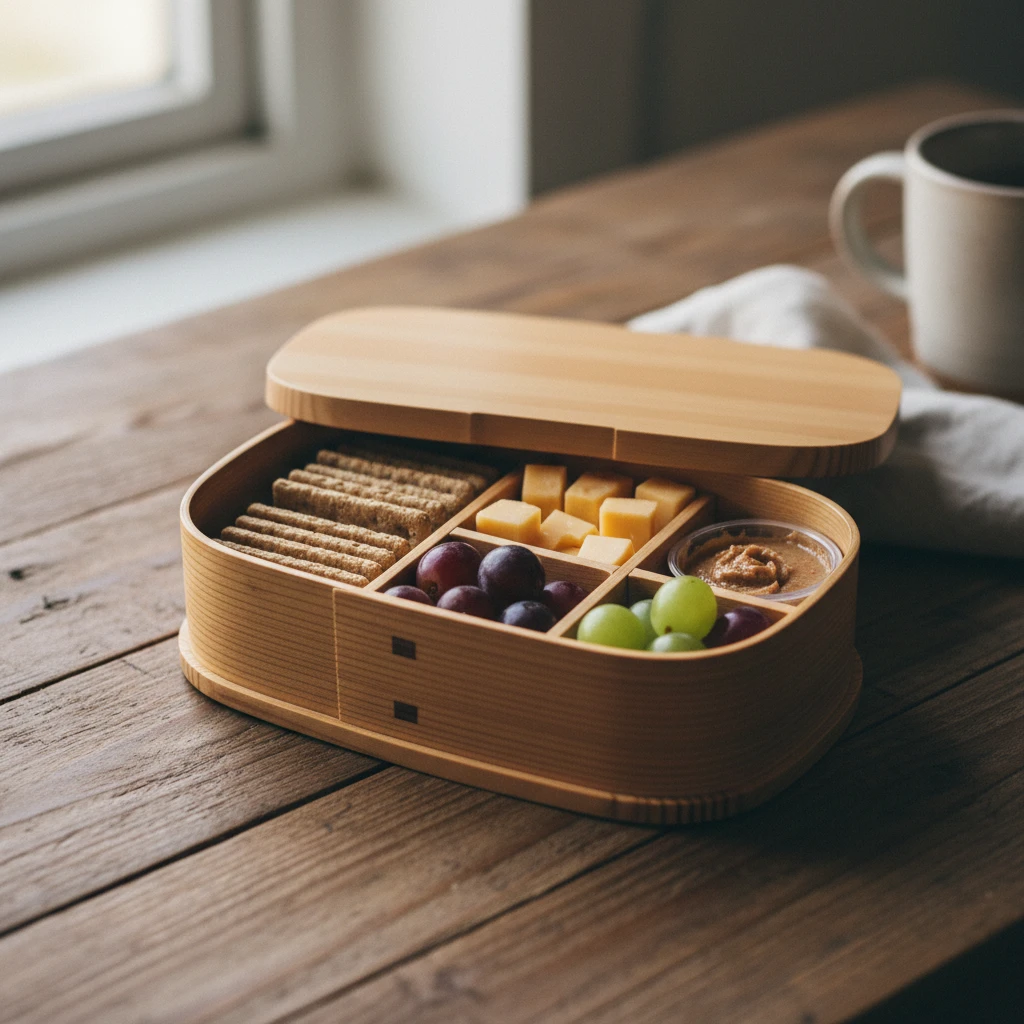
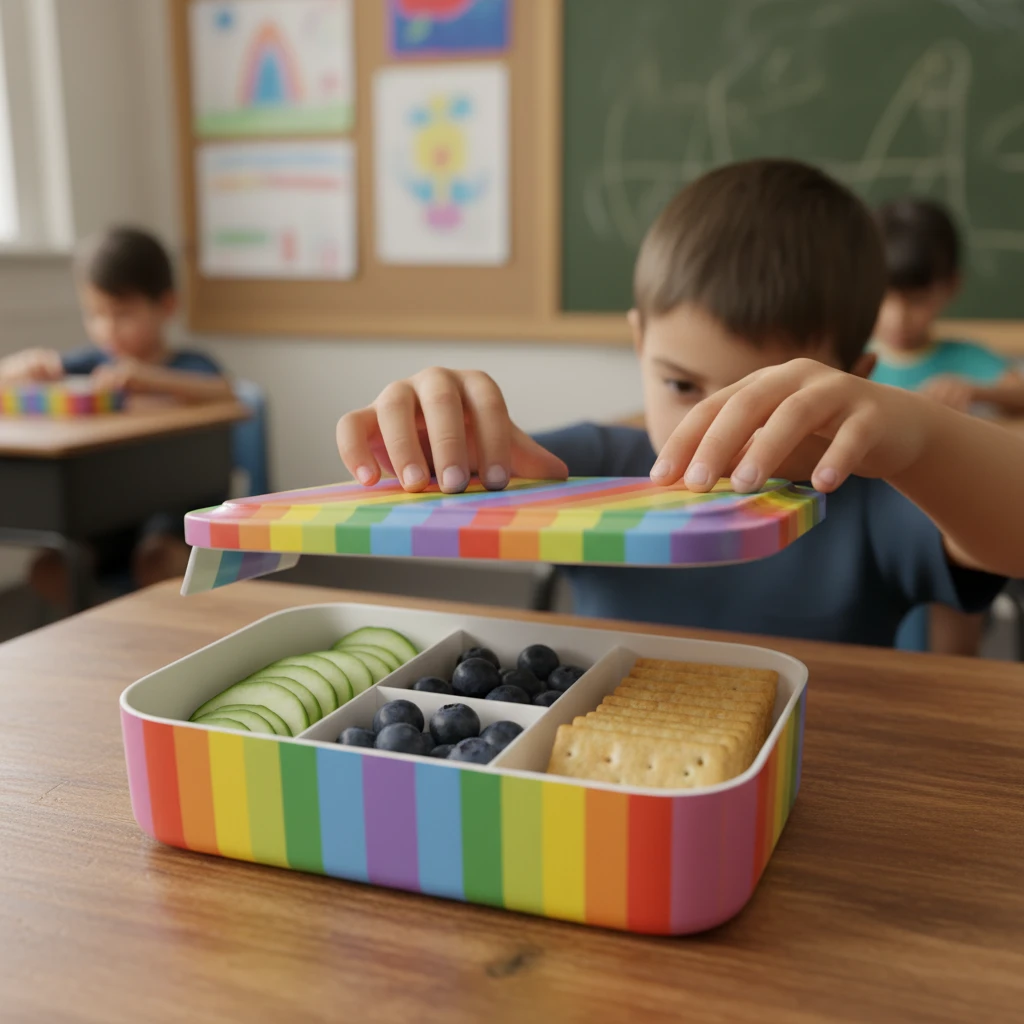
The bento-style lunchbox is perhaps the most effective tool for sensory issues. By physically separating foods into rigid compartments, you eliminate the risk of items touching. This visual separation provides a sense of order and control.
Dealing with Peer Comments on Food
In the New Zealand school environment, “food policing” among peers can be a major source of distress. Comments like “Why do you only eat crackers?” or “That smells weird” can cause a child to stop eating at school entirely to avoid scrutiny.
How to equip your child for social scrutiny?
Role-playing at home is an effective strategy. We need to provide the child with scripts that shut down the conversation without escalating conflict. The goal is to make the food boring to others.
- The “Boring” Response: “I like it.” (Repeated calmly).
- The Medical Deflection: “My doctor says this is what I need to eat for energy.”
- The Subject Change: “I’m just hungry. Did you see the game last night?”
Parents should also speak with teachers about monitoring “lunchbox policing.” Schools often have healthy eating policies that inadvertently shame children with ARFID. If a teacher comments on the lack of “greens” in a lunchbox, it can be devastating. This leads us to the next critical strategy.
Communicating with Teachers about ARFID
Educators are trained to encourage variety and nutrition, which directly conflicts with the management of sensory-based feeding disorders. It is imperative to bridge this gap early in the school year.
What should be included in a communication plan?
You may need to request an Individual Education Plan (IEP) or a medical exemption regarding school food policies. Your communication should be clear, professional, and backed by your treatment team.
Key points to convey to the school:
- Diagnosis is not Preference: Explain that ARFID/Sensory Issues are not “picky eating” but a medical condition.
- Fed is Best: Emphasize that for this child, calories in any form are the priority over nutritional diversity during school hours. A packet of chips eaten is infinitely better than a salad thrown away.
- No Food Comments: Request a “neutral food talk” policy for your child. Teachers should not praise them for eating “good” food nor criticize “bad” food.
- Privacy: Ensure that any accommodations (like leaving the room to eat) are handled discreetly to avoid social stigma.

The Role of “Safe Foods” in Recovery
In the context of Eating Disorder Treatment & Recovery, parents often worry that accommodating sensory preferences enables the disorder. However, the school day is about survival and stabilization.
Pushing a child to eat challenging foods in a high-stress environment like school usually backfires, leading to restriction. By packing lunchbox ideas for sensory issues that consist entirely of “safe foods,” you reduce the cortisol load on the child. This preserves their mental energy for the classroom and allows for more challenging food exposures to happen at home, where the environment is safe and controlled.
Remember, a lunchbox that comes home empty, regardless of what was inside, is a victory. The nutritional rehabilitation can be balanced out at breakfast and dinner. The school lunch is for energy, social inclusion (on their terms), and maintaining the habit of eating during the day.
What are the best lunchbox containers for sensory issues?
Bento-style boxes (like Yumbox or PlanetBox) are superior because they have rigid, leak-proof compartments. This prevents food from touching, which is a major sensory trigger. Stainless steel thermoses are also essential for maintaining precise temperatures for hot or cold foods.
How do I stop my child’s sandwich from getting soggy?
To prevent soggy sandwiches, create a barrier layer using peanut butter, cheese, or dry lettuce between the bread and moisture-rich fillings like tomato. Alternatively, use the “deconstructed” method: pack the bread, meat, and cheese in separate compartments and let the child assemble it or eat the parts individually.
Should I force my child to eat school lunch?
No. Forcing a child with sensory issues or ARFID to eat often increases anxiety and reinforces food aversions. Instead, focus on packing “safe foods” they trust. If they cannot eat at school, focus on a heavy breakfast and an immediate after-school meal while working with a professional on desensitization.
What are good protein sources for sensory issues?
Texture-consistent proteins are best. Hard-boiled eggs, cheese cubes, yogurt pouches, roasted chickpeas, smooth nut butters (if allowed), and cold cooked chicken breast cut into uniform cubes are popular options. Some children also tolerate protein-fortified pancakes or muffins.
How do I explain my child’s eating to their teacher?
Frame it as a medical necessity. Use terms like “Sensory Processing Disorder” or “ARFID” if diagnosed. Explain that the priority is caloric intake to support learning and that standard “healthy eating” pressure causes them to restrict food entirely. Request a neutral approach where food is not commented on.
Why does my child only eat crunchy foods?
Crunchy foods provide strong proprioceptive input (sensory feedback) to the jaw, which can be calming and organizing for the nervous system. Furthermore, crunchy processed foods (like crackers) are predictable; every cracker tastes and feels exactly the same, unlike fruit which varies in texture and sweetness.