The relationship between OCD and eating disorders is characterized by a high rate of comorbidity where intrusive thoughts drive compulsive, ritualistic eating behaviors. Unlike body dysmorphia-driven disorders, OCD-related eating issues often stem from fears of contamination, a need for symmetry, or emetophobia, requiring specialized treatment like Exposure and Response Prevention (ERP) to address the underlying anxiety.
The Intersection of OCD and Eating Disorders
When discussing the OCD and eating disorders relationship, it is essential to understand that these conditions frequently co-occur. Research indicates that a significant percentage of individuals diagnosed with an eating disorder also meet the criteria for Obsessive-Compulsive Disorder (OCD). While they are distinct diagnoses, they share a fundamental mechanism: the cycle of anxiety and control.
In a standard eating disorder presentation, such as Anorexia Nervosa, the primary driver is often a distortion of body image and an intense fear of weight gain. However, when OCD is the primary or co-occurring driver, the restriction or modification of food intake is not always about weight. Instead, it is about quelling an obsessive thought. The food becomes the object through which the anxiety is managed.
For families and clinicians in New Zealand, distinguishing between the two is vital for effective treatment. Treating a patient for body image issues when their restriction is actually driven by a fear of germs or a need for symmetry will likely result in treatment resistance. The rigid rules around food in OCD are rituals performed to prevent a perceived catastrophe, whereas, in pure eating disorders, the rules are often a means to achieve a physical ideal.

Food Contamination Fears (Emetophobia)
One of the most common manifestations of OCD within the realm of eating is the fear of contamination. This often presents as a fear of getting sick, specifically vomiting, known as emetophobia. For individuals suffering from this, food is not a source of nourishment but a potential vector for pathogens.
How Contamination OCD Mimics Anorexia
To the untrained eye, a person refusing to eat looks like they are suffering from Anorexia. They lose weight, they avoid mealtimes, and they inspect their food. However, the internal narrative is vastly different. An individual with contamination OCD might avoid meat not because of the calories, but because of an obsessive fear of salmonella or E. coli. They may refuse to eat food prepared by others because they cannot verify the hygiene standards of the kitchen.
This can lead to severe restriction where the individual creates a list of “safe foods.” These are usually pre-packaged, processed items where the seal is intact, guaranteeing that no external contaminants have touched the food. Ironically, this often leads to a diet high in preservatives and low in nutritional value, despite the weight loss.
The Role of Expiration Dates
A hallmark of this subtype of OCD is an obsession with expiration dates. An individual may refuse to eat a yogurt that expires on the day of consumption, fearing that the bacteria count has already reached a critical level. This ritualistic checking becomes a compulsion. If the date is not clearly visible, the food is discarded. This wastefulness is often a source of shame for the sufferer, but the anxiety of consuming “spoiled” food is too great to overcome without therapeutic intervention.

Symmetry and Counting Rituals with Food
Beyond contamination, the OCD and eating disorders relationship is frequently observed through symmetry and ordering compulsions. This is often referred to as “Just Right” OCD. The distress here comes from a sensory or psychological feeling that things are not aligned, balanced, or completed correctly.
Ritualistic Cutting and Arranging
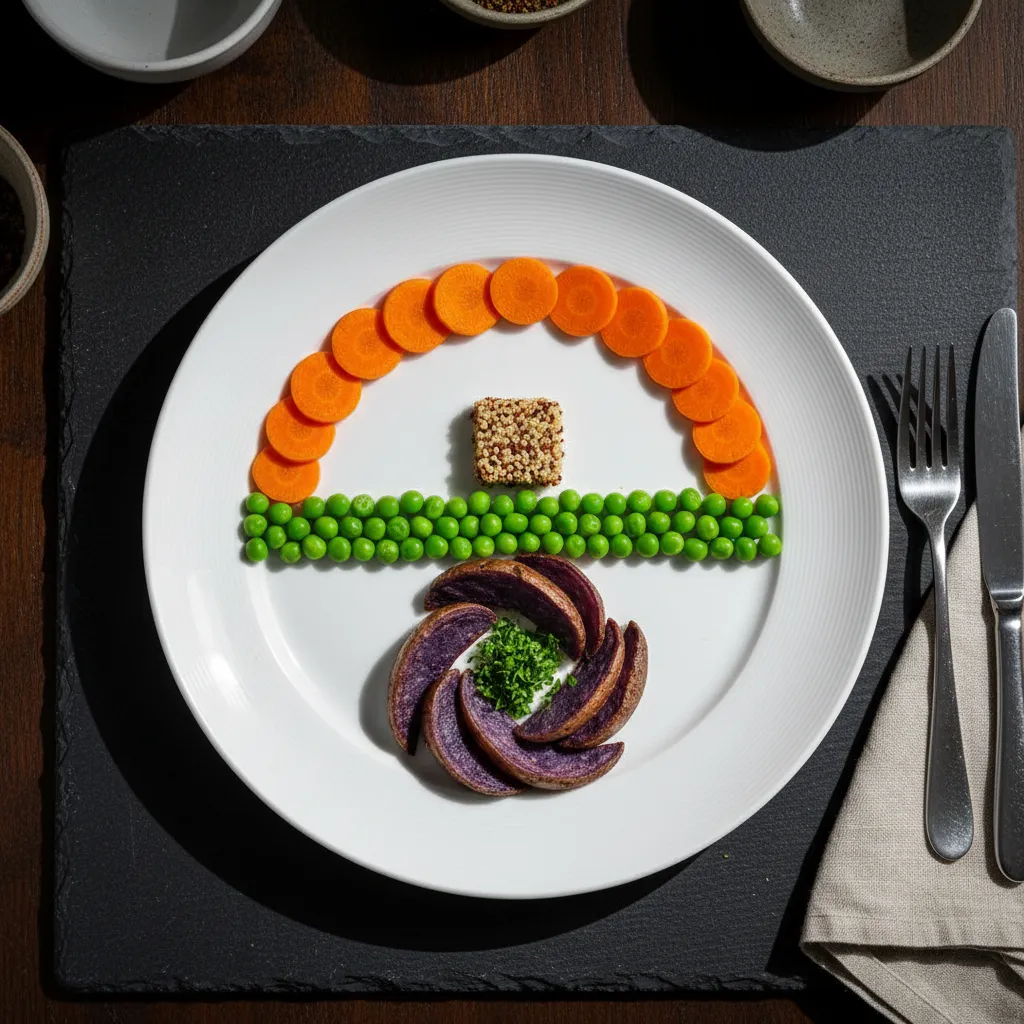
Mealtime for someone with this presentation of OCD can be an exhausting ordeal. The food on the plate may need to be arranged in a specific geometric pattern. Vegetables cannot touch the carbohydrates. The meat must be cut into perfectly equal squares. If a piece of food is cut casually or unevenly, the individual may feel an overwhelming sense of incompleteness or agitation that prevents them from eating it.
This behavior slows down the eating process significantly. In a social setting or a family dinner, this delay can be misinterpreted as picking at food to avoid eating (a common anorexia symptom). However, the person may be very hungry but is blocked from eating by the psychological barrier of the ritual not being satisfied.
Chewing and Swallowing Counts
Counting compulsions are invisible to the observer but debilitating for the sufferer. A person may feel compelled to chew each bite a specific number of times—perhaps in sets of four or ten. If they lose count or are interrupted, they may feel the need to spit the food out and start over, or they may suffer intense anxiety believing that something bad will happen because the ritual was interrupted.
This applies to swallowing as well. Some individuals have to swallow in a certain way to feel that the food has gone down “correctly.” This hyper-awareness of the swallowing mechanism can actually lead to a sensation of choking or difficulty swallowing (pseudodysphagia), further reinforcing the fear of eating.
Differentiating ARFID and Anorexia in OCD Contexts
In the landscape of New Zealand mental health treatment, accurate diagnosis is the precursor to recovery. The intersection of OCD and eating often manifests as Avoidant/Restrictive Food Intake Disorder (ARFID), rather than Anorexia Nervosa or Bulimia.
ARFID is characterized by a lack of interest in eating or an avoidance based on the sensory characteristics of food or concern about aversive consequences of eating. This “concern about aversive consequences” is where OCD thrives. The fear of choking, vomiting, or contamination aligns perfectly with ARFID criteria.
Key differentiators include:
- Body Image: Patients with OCD-driven ARFID generally do not have a distorted body image. They know they are thin and often wish to gain weight, but their rituals prevent it. Anorexia patients typically fear weight gain.
- Nature of Fear: OCD fear is specific (e.g., “If I eat this, I will vomit” or “If I don’t cut this into four pieces, my mom will get hurt”). Anorexia fear is often more generalized around fatness or lack of control over body shape.
- Response to Logic: While both are mental illnesses, OCD patients can often identify that their thoughts are irrational (“I know the yogurt is probably fine, but I can’t risk it”). In severe Anorexia, the delusion regarding body size is often fixed.
Treating the OCD to Help the ED
Treating the eating disorder without addressing the underlying OCD is like putting a plaster on a broken bone. You may cover the surface wound, but the structural integrity remains compromised. In New Zealand’s therapeutic community, a multidisciplinary approach is favored.
When OCD is the root cause, standard nutritional rehabilitation (re-feeding) is necessary but insufficient. If you force a patient with contamination fears to eat “unsafe” food without psychological tools, you risk traumatizing them further. The anxiety must be treated concurrently with the malnutrition.
SSRIs (Selective Serotonin Reuptake Inhibitors) are often prescribed by GPs or psychiatrists in NZ to help lower the baseline anxiety levels, making the cognitive work of therapy more accessible. However, medication alone is rarely a cure. The gold standard for behavioral change in this context is ERP.
Exposure and Response Prevention (ERP) for Eating
Exposure and Response Prevention (ERP) is the most effective evidence-based treatment for OCD. In the context of the OCD and eating disorders relationship, ERP involves systematically facing food-related fears without engaging in the compulsive rituals.
Creating a Hierarchy of Fears
Therapy begins by creating a “fear ladder.” At the bottom might be looking at a picture of a “contaminated” food. At the top might be eating a sandwich that has touched a table surface. The patient and therapist work through these steps gradually.
Example ERP Exercises for Eating Issues
- For Symmetry: The therapist might ask the patient to cut a sandwich unevenly and eat the larger half first, sitting with the discomfort of the asymmetry without “fixing” it.
- For Contamination: A patient might be asked to eat an apple without washing it for a full 20 seconds, or to eat food that has been shared from a communal bowl.
- For Counting: The patient is instructed to eat while engaging in conversation, preventing them from counting chews. If they lose count, they are not allowed to spit the food out or restart.
The goal of ERP is habituation. The patient learns that the anxiety rises, peaks, and eventually falls on its own without the performance of the ritual. Furthermore, they learn that the feared outcome (e.g., immediate vomiting or catastrophe) does not occur.

Recovery Resources in New Zealand
Recovering from co-occurring OCD and eating disorders is a challenging journey, but support is available throughout New Zealand. It is crucial to build a team that includes a GP, a psychologist specializing in ERP, and a dietitian who understands mental health nuances.
Key Organizations:
- EDANZ (Eating Disorders Association of New Zealand): Provides support, information, and resources for parents and carers of people with eating disorders. They can often recommend clinicians who understand the OCD overlap.
- Mental Health Foundation of New Zealand: Offers a wide range of resources and helpline numbers for immediate support.
- Anxiety New Zealand Trust: Specializes in anxiety disorders, including OCD, and offers a free 24/7 helpline (0800 ANXIETY).
If you or a loved one is struggling, remember that the rituals are a symptom of a treatable condition. By addressing the OCD directly through ERP and supported nutrition, a healthy relationship with food—and a life free from constant anxiety—is possible.
Can OCD cause an eating disorder?
Yes, OCD can cause eating behaviors that mimic eating disorders. Obsessions regarding contamination, choking, or morality can lead to severe food restriction (ARFID) or ritualistic eating patterns that result in weight loss and malnutrition, even without body image issues.
What is the difference between Orthorexia and OCD?
Orthorexia is an obsession with “healthy” or “pure” eating focused on the quality of food for health benefits. OCD-related eating is often focused on fears of contamination, poisoning, or magical thinking (e.g., “if I eat this, something bad will happen”), rather than just health optimization.
How do I treat OCD-induced eating issues?
The most effective treatment is Exposure and Response Prevention (ERP) therapy combined with nutritional rehabilitation. Medication (SSRIs) may also be prescribed. The goal is to face the fear (e.g., eating “imperfect” food) without performing the ritual, allowing the brain to relearn safety.
Is ARFID a form of OCD?
ARFID is a distinct diagnosis in the DSM-5, but it has a very high comorbidity with OCD. Many people with ARFID restrict food due to fears of choking or vomiting, which are anxiety-driven mechanisms similar to OCD, but ARFID also includes sensory sensitivities and lack of appetite.
Can you recover from both OCD and an eating disorder?
Yes, recovery is possible. However, treatment is often more complex and requires a dual-diagnosis approach. Treating the eating disorder helps repair the brain physically, which is necessary for the cognitive work required to treat the OCD.
What are common food rituals in OCD?
Common rituals include cutting food into specific shapes or sizes, eating foods in a specific order (e.g., by color), chewing a set number of times, checking expiration dates excessively, or washing food with cleaning agents due to contamination fears.