OSFED (Other Specified Feeding or Eating Disorder) is a clinical diagnosis for severe eating disorders that do not meet the strict criteria for Anorexia, Bulimia, or Binge Eating Disorder. Despite the “other” label, OSFED is the most common eating disorder, carrying serious physical and psychological risks that require professional medical and therapeutic intervention.
For many individuals and families navigating the mental health landscape in New Zealand, the term OSFED can be confusing. It is often misunderstood as a “catch-all” category or, worse, a less severe condition. This could not be further from the truth. OSFED replaces the older diagnostic term EDNOS (Eating Disorder Not Otherwise Specified) and represents a significant portion of those struggling with life-threatening food and body image issues.
Understanding what OSFED is constitutes the first step toward recovery. Whether you are concerned about a loved one or your own relationship with food, recognizing that this diagnosis validates the severity of the struggle is vital for accessing appropriate care within the New Zealand healthcare system.
What is OSFED Eating Disorder?
OSFED stands for Other Specified Feeding or Eating Disorder. It is a diagnostic category found in the DSM-5 (Diagnostic and Statistical Manual of Mental Disorders, 5th Edition). It is used when a person presents with significant eating disorder symptoms that cause distress and impairment, yet they do not meet the full, rigid criteria for Anorexia Nervosa, Bulimia Nervosa, or Binge Eating Disorder (BED).
Historically, there has been a misconception that if a patient does not fit into the “classic” boxes of Anorexia or Bulimia, their condition is mild. However, research consistently shows that individuals with OSFED experience mortality rates, medical complications, and psychological distress comparable to, and sometimes exceeding, those with other specific diagnoses.
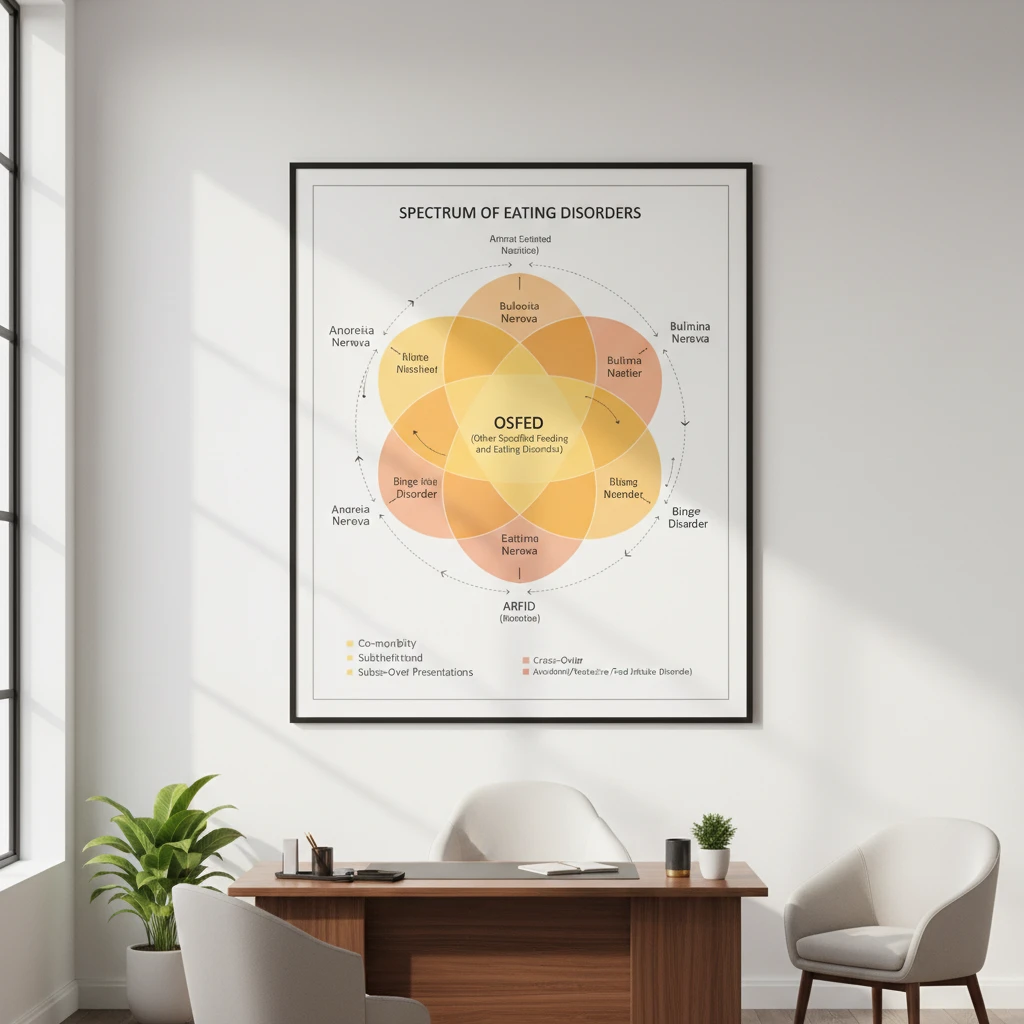
Why OSFED is the Most Common ED Diagnosis
In clinical settings globally and within New Zealand, OSFED is frequently the most common diagnosis assigned. Some studies suggest it accounts for 30% to 40% of all eating disorder cases. Why is this prevalence so high?
The Complexity of Human Behavior
Eating disorders rarely manifest in a way that perfectly aligns with a textbook checklist. Human behavior is complex and fluid. A person might restrict food intake severely (like in Anorexia) but maintain a body weight that is technically within a “normal” range. Another might binge and purge (like in Bulimia) but do so with a frequency that falls just short of the DSM-5 threshold (e.g., less than once a week).
Diagnostic Evolution
The transition from EDNOS to OSFED in 2013 was intended to provide more specificity. However, because the criteria for Anorexia and Bulimia remain highly specific regarding weight thresholds and symptom frequency, many severely ill patients naturally fall into the OSFED category. This high prevalence highlights that eating disorders exist on a spectrum rather than in isolated silos.
Subtypes of OSFED Explained
OSFED is an umbrella term that encompasses five specific examples. Understanding these subtypes is crucial for identifying the specific nature of the disorder and tailoring treatment plans.
1. Atypical Anorexia Nervosa
In cases of Atypical Anorexia Nervosa, all the criteria for Anorexia Nervosa are met, except that despite significant weight loss, the individual’s weight remains within or above the “normal” range. This is arguably one of the most dangerous subtypes because the physical severity is often overlooked by medical professionals due to weight stigma. Patients suffer the same malnutrition, bradycardia (slow heart rate), and psychological torture as those with typical Anorexia, but may be praised for their weight loss rather than treated.
2. Bulimia Nervosa (of low frequency and/or limited duration)
This diagnosis applies when an individual meets all criteria for Bulimia Nervosa (binge eating followed by compensatory behaviors like vomiting or excessive exercise), but the behaviors occur, on average, less than once a week and/or for less than three months. The risks of electrolyte imbalance and esophageal damage remain high regardless of frequency.
3. Binge Eating Disorder (of low frequency and/or limited duration)
Similar to the above, this involves binge eating episodes that occur less frequently than once a week or for less than three months. The psychological distress regarding the bingeing is still present and severe.

4. Purging Disorder
Purging Disorder involves recurrent purging behavior to influence weight or shape (e.g., self-induced vomiting, misuse of laxatives or diuretics) in the absence of binge eating. This distinguishes it from Bulimia. This disorder can lead to rapid medical instability due to fluid and electrolyte shifts.
5. Night Eating Syndrome (NES)
NES is characterized by recurrent episodes of night eating. This manifests as eating after awakening from sleep or excessive food consumption after the evening meal. Unlike Binge Eating Disorder, the person is usually fully awake and aware. This causes significant distress and impairment in daily functioning and is not better explained by sleep-wake cycles or social norms.
Warning Signs and Symptoms
Because OSFED covers a wide range of behaviors, symptoms can vary. However, families and friends should look for these common indicators:
- Physical Signs: frequent weight fluctuations, dizziness or fainting, feeling cold all the time, dental issues (from vomiting), and sleep disturbances.
- Behavioral Signs: disappearance of large amounts of food, frequent trips to the bathroom after meals, rigid rituals around food, avoiding social meals, and hoarding food.
- Psychological Signs: intense fear of weight gain, extreme dissatisfaction with body shape, mood swings, anxiety, and depression.
The Myth of “Not Sick Enough”
Perhaps the most insidious aspect of an OSFED diagnosis is the internal narrative it validates: the idea that the sufferer is “not sick enough” to deserve treatment. Because the diagnosis is defined by what it is not (not Anorexia, not Bulimia), patients often feel like they have failed at having a “real” eating disorder.
This is a dangerous myth. Medical data confirms that OSFED is severe. For example, individuals with Atypical Anorexia can suffer from cardiac instability just as severe as those with low-weight Anorexia. The psychological torment of food obsession is identical across diagnoses.

In the New Zealand context, where public health resources can be stretched, patients with OSFED sometimes struggle to get referrals because they don’t meet BMI cut-offs. It is essential to advocate that eating disorders are mental illnesses with physical consequences, not just weight disorders. Severity is measured by the impact on life and physical health markers (like heart rate and blood pressure), not just a number on a scale.
Accessing Treatment in New Zealand
Recovery from OSFED is entirely possible, but it requires professional support. In New Zealand, the pathway to treatment usually involves a multidisciplinary approach.
Step 1: GP Consultation
The first step is visiting a General Practitioner (GP). It is helpful to request an extended consultation. Be honest about your symptoms. If you suspect OSFED or Atypical Anorexia, ask for a full physical check-up including orthostatic blood pressure and heart rate, as these can show physical strain even if weight is normal.
Step 2: Public vs. Private Referral
Public System: Your GP can refer you to the local DHB (District Health Board) mental health or specialized eating disorder service. Be aware that waitlists can be long and criteria for entry can be strict regarding severity.
Private System: Many New Zealanders opt for private care to access help faster. This involves building a team that typically includes:
- A Psychologist or Psychotherapist specializing in EDs (using modalities like CBT-E or FBT).
- A Registered Dietitian to help normalize eating patterns and restore nutritional health.
- Medical monitoring by a GP.
Step 3: Support Organizations
EDANZ (Eating Disorders Association of New Zealand): This is a crucial resource for families. They provide support, information, and advocacy. They can help navigate the often confusing system and provide hope that recovery is achievable.

People Also Ask
Is OSFED less serious than anorexia?
No. OSFED is just as serious as Anorexia Nervosa. Research indicates that mortality rates and medical complications (such as electrolyte imbalances and cardiac issues) in OSFED patients are comparable to those with Anorexia and Bulimia. The “Other Specified” label refers to diagnostic criteria, not severity.
What is the difference between OSFED and EDNOS?
They are essentially the same category, but from different editions of the DSM. EDNOS (Eating Disorder Not Otherwise Specified) was the term used in the DSM-IV. In 2013, the DSM-5 renamed it OSFED (Other Specified Feeding or Eating Disorder) to provide more specific subtypes and reduce the number of patients falling into a generic “catch-all” category.
Can you recover from OSFED?
Yes, full recovery from OSFED is possible. With early intervention and a multidisciplinary treatment team (including psychological therapy, nutritional support, and medical monitoring), individuals can heal their relationship with food and body image. Evidence-based treatments like CBT-E are effective for OSFED.
What is atypical anorexia?
Atypical Anorexia is a subtype of OSFED where an individual meets all the psychological and behavioral criteria for Anorexia Nervosa (restriction, fear of weight gain, body image distortion) but is not underweight. It is a severe mental illness that carries high physical risks despite the person appearing to be a “normal” weight.
How is OSFED treated in New Zealand?
Treatment in New Zealand typically involves a combination of psychological therapy (such as Cognitive Behavioral Therapy for Eating Disorders or Maudsley Family Based Treatment) and nutritional rehabilitation. This can be accessed through the public health system via DHB referrals or through private practitioners.
Does OSFED cause physical health problems?
Yes. OSFED can cause severe physical health issues including electrolyte imbalances, heart palpitations, low blood pressure, gastrointestinal distress, loss of bone density, and hormonal disruptions. These complications can occur regardless of the patient’s BMI.