Binge eating disorder treatment in New Zealand focuses on evidence-based psychological interventions, primarily Enhanced Cognitive Behavioural Therapy (CBT-E), alongside nutritional rehabilitation from non-diet dietitians. Patients can access care through public mental health services via GP referral or seek private specialists for personalized medication management and recovery support.
Binge Eating Disorder (BED) is the most common eating disorder in New Zealand, yet it often remains the most stigmatized and misunderstood. Unlike transient overeating, BED is a severe, life-altering mental health condition characterized by recurrent episodes of eating large quantities of food, accompanied by a sense of loss of control and immense shame. For Kiwis struggling with this disorder, navigating the landscape of binge eating disorder treatment in NZ can feel overwhelming, but recovery is entirely possible with the right professional support.
Effective treatment requires a multidisciplinary approach that addresses the psychological roots of the disorder while normalizing eating patterns. In New Zealand, the gold standard for recovery involves a combination of specialized psychotherapy, medical monitoring by General Practitioners (GPs), and nutritional guidance from registered dietitians who adhere to weight-inclusive paradigms.
What is the Binge-Restrict Cycle?
To effectively treat Binge Eating Disorder, one must first understand the mechanism that drives it: the binge-restrict cycle. This is the core engine of the disorder and the primary target of clinical intervention. Many New Zealanders seeking help initially believe their problem is a lack of willpower, but clinical evidence suggests the issue is biological and psychological restriction.
The cycle typically begins with restriction. This can be physical restriction (dieting, skipping meals, cutting out food groups like carbs) or mental restriction (labeling foods as “good” or “bad” and feeling guilty for eating). The human brain interprets this restriction as a famine state. In response, it upregulates hunger hormones and obsession with food as a survival mechanism.
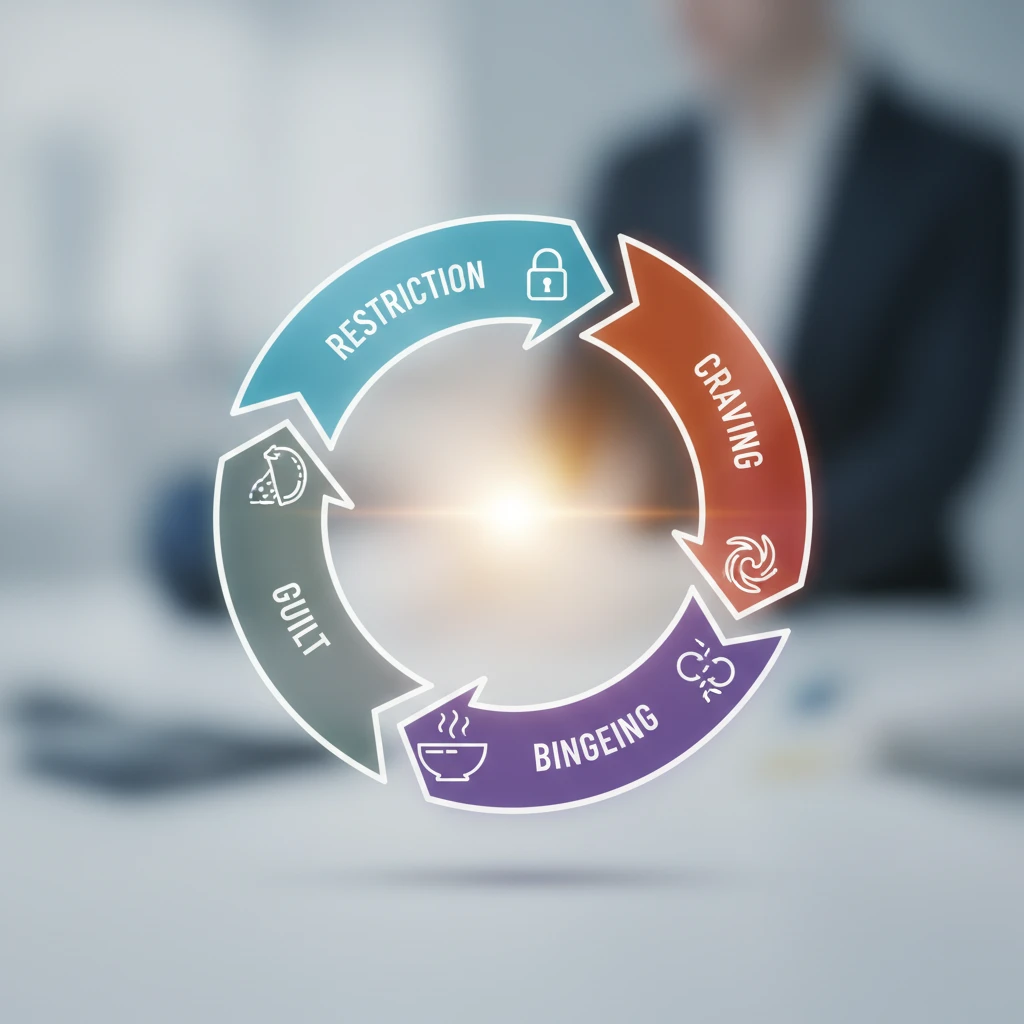
Eventually, the biological drive to eat overpowers the conscious desire to restrict, leading to a binge. During a binge, the individual eats rapidly and often past the point of fullness, seeking relief from the physiological deprivation or emotional distress. Following the binge, intense feelings of shame, guilt, and distress occur. To manage these negative feelings, the individual resolves to “be good” tomorrow, re-initiating the restriction phase and restarting the cycle.
Why Traditional Weight Loss Advice Fails
In the context of binge eating disorder treatment in NZ, standard weight loss advice is often counterproductive. Prescribing a calorie deficit to someone with BED reinforces the restriction phase of the cycle, inevitably leading to more severe bingeing episodes. Effective treatment focuses on regular eating—typically three meals and two to three snacks a day—to stabilize blood sugar and reassure the brain that food is consistently available.
What is CBT-E and Why is it the Gold Standard?
Enhanced Cognitive Behavioural Therapy (CBT-E) is widely recognized by New Zealand health authorities and international guidelines as the leading treatment for Binge Eating Disorder. Unlike general counseling, CBT-E is a highly structured, time-limited therapy designed specifically to target the psychopathology of eating disorders.
CBT-E operates on the premise that your eating problem is maintained by a specific set of cognitive processes—mainly the over-evaluation of shape and weight. In other words, your self-worth is judged almost exclusively by the number on the scale or how your body looks, rather than your personality, achievements, or relationships.
The Stages of CBT-E Treatment
When you engage a clinical psychologist or specialist therapist in NZ for CBT-E, the treatment usually follows four stages over 20 weeks:
- Stage One (Weeks 1-4): Establishing “regular eating.” This is the non-negotiable foundation of recovery. You work to replace chaotic bingeing with a predictable pattern of eating every 3-4 hours. This mechanical eating disrupts the urge to binge.
- Stage Two (Weeks 5-6): A review of progress. The therapist and client assess how well the regular eating is working and identify any barriers.
- Stage Three (Weeks 7-12): Addressing the maintaining mechanisms. This involves tackling body image issues, dietary rules, and mood-related eating triggers.
- Stage Four (Weeks 13-20): Preventing relapse. Developing a plan to maintain progress after therapy concludes.

How is Medication Used for BED in New Zealand?
While psychological therapy is the first-line treatment, medication can play a supportive role. In New Zealand, the landscape for pharmaceutical intervention differs slightly from the US or UK due to PHARMAC funding regulations.
Lisdexamfetamine (Vyvanse)
Lisdexamfetamine is the only medication with formal FDA approval for treating moderate to severe Binge Eating Disorder in adults. In New Zealand, it is available but navigating access can be complex. While it is funded for ADHD under specific Special Authority criteria, it is generally not funded specifically for Binge Eating Disorder. This means patients prescribed this medication for BED often have to pay the full private cost, which can range significantly depending on the pharmacy.
This medication works by affecting neurotransmitters in the brain to reduce the impulse to binge. It should always be managed by a psychiatrist or a GP with a special interest in mental health.
SSRIs (Antidepressants)
Selective Serotonin Reuptake Inhibitors (SSRIs), such as Fluoxetine, are frequently prescribed in NZ. While they do not cure BED, they can be helpful in treating co-occurring conditions like depression or anxiety, which often trigger binge episodes. Fluoxetine is fully funded in New Zealand and is often a more accessible first step for patients in the public system.
The Role of Non-Diet Dietitians in Recovery
Nutritional rehabilitation is critical, but it must be the right kind. A “weight-loss dietitian” is rarely appropriate for treating BED. Instead, you need a Non-Diet Approach or HAES (Health At Every Size) aligned dietitian.
These professionals do not prescribe meal plans designed to shrink your body. Instead, they focus on:
- Mechanical Eating: Helping you eat by the clock to restore hunger and fullness cues.
- Food Neutrality: Removing the moral judgment from food (e.g., chocolate is not “bad,” kale is not “good”).
- Fear Foods: Systematically reintroducing foods you have restricted to reduce their power over you.

In New Zealand, look for dietitians who specifically list “Eating Disorders” or “Intuitive Eating” as their specialty. Many private practice dietitians offer Zoom consultations nationwide, making access easier for those in rural NZ.
Navigating the NZ Health System: Public vs. Private
Accessing binge eating disorder treatment in NZ usually falls into two pathways: the public health system (Te Whatu Ora) and the private sector. Understanding the differences is vital for managing expectations and getting help quickly.
Public System (Te Whatu Ora)
To access public services, you generally need a referral from your GP. The public system provides high-quality care, often involving multidisciplinary teams (psychologists, dietitians, doctors). However, criteria for entry can be strict. Services are often reserved for severe cases where there is significant physical risk or comorbidity.
Wait times can also be lengthy. If you are referred to a local Eating Disorders Service (EDS) and do not meet the threshold for immediate care, you may be referred back to primary care with management advice.
Private Sector
For those who have medical insurance or the ability to self-fund, the private sector offers faster access and more choice. You can self-refer to many private eating disorder clinics in Auckland, Wellington, and Christchurch. Private health insurance in NZ may cover psychological sessions and dietitian appointments, but policies vary greatly—check if your policy covers “psychiatric conditions” or “dietitian services.”
Self-Help and Community Support
Recovery does not happen in isolation. Beyond clinical treatment, connecting with others who understand the struggle is invaluable. In New Zealand, EDANZ (Eating Disorders Association of New Zealand) is a crucial resource. They provide support for families and detailed information on finding help.
Furthermore, self-help books based on CBT-E, such as “Overcoming Binge Eating” by Dr. Christopher Fairburn, are often recommended by NZ therapists as a first step or adjunct to therapy. These resources guide you through the monitoring and behavioral changes required to break the cycle.

Remember, recovery from Binge Eating Disorder is a marathon, not a sprint. It involves rewiring neural pathways that have been entrenched for years. Whether through the public system or private specialists, the key is to seek professional guidance that prioritizes stopping the restriction, rather than just stopping the binge.
People Also Ask
Is Binge Eating Disorder covered by public health in NZ?
Yes, Binge Eating Disorder is recognized by the New Zealand public health system. However, access to specialized Eating Disorder Services (EDS) is often prioritized based on severity and physical risk. Mild to moderate cases may be managed by General Practitioners or primary mental health services rather than specialized hospital-based clinics.
How do I get a diagnosis for BED in New Zealand?
A diagnosis usually starts with a visit to your General Practitioner (GP). Your GP will perform a physical check-up and ask screening questions about your eating habits. They may then refer you to a psychologist, psychiatrist, or a specialized eating disorder service for a formal assessment based on DSM-5 criteria.
Can I get Vyvanse funded for binge eating in NZ?
Generally, no. While Vyvanse (Lisdexamfetamine) is approved for use, it is not currently funded by PHARMAC specifically for Binge Eating Disorder. It is funded for ADHD under Special Authority. Patients prescribed Vyvanse for BED typically must pay the full private cost of the medication.
What is the difference between overeating and Binge Eating Disorder?
The main difference is the sense of loss of control and the distress that follows. Overeating might happen at a holiday feast, but it doesn’t typically involve hiding food, eating until painfully full, or feeling immense shame and self-loathing. BED involves recurrent episodes (at least once a week for three months) and is not followed by purging.
Are there inpatient treatments for BED in New Zealand?
Inpatient treatment is predominantly reserved for patients who are medically unstable or at high psychiatric risk. Most treatment for Binge Eating Disorder is conducted on an outpatient basis (community-based), as evidence suggests that learning to manage eating in one’s tailored home environment is more effective for long-term recovery for this specific disorder.
How much does a private eating disorder psychologist cost in NZ?
Private clinical psychologists in New Zealand typically charge between $180 and $250 per hour. Specialist appointments with psychiatrists may cost significantly more. Some costs may be subsidized if you have comprehensive private health insurance, but it is essential to check your policy limits regarding mental health.