Trauma and eating disorders are fundamentally linked, with disordered eating often serving as a maladaptive coping mechanism to manage the emotional dysregulation caused by Post-Traumatic Stress Disorder (PTSD). Research suggests that individuals utilize restriction, purging, or bingeing to regain a sense of control, numb painful memories, or dissociate from the body following traumatic events, particularly childhood abuse or sexual assault.
The Neurobiology of Trauma and Disordered Eating
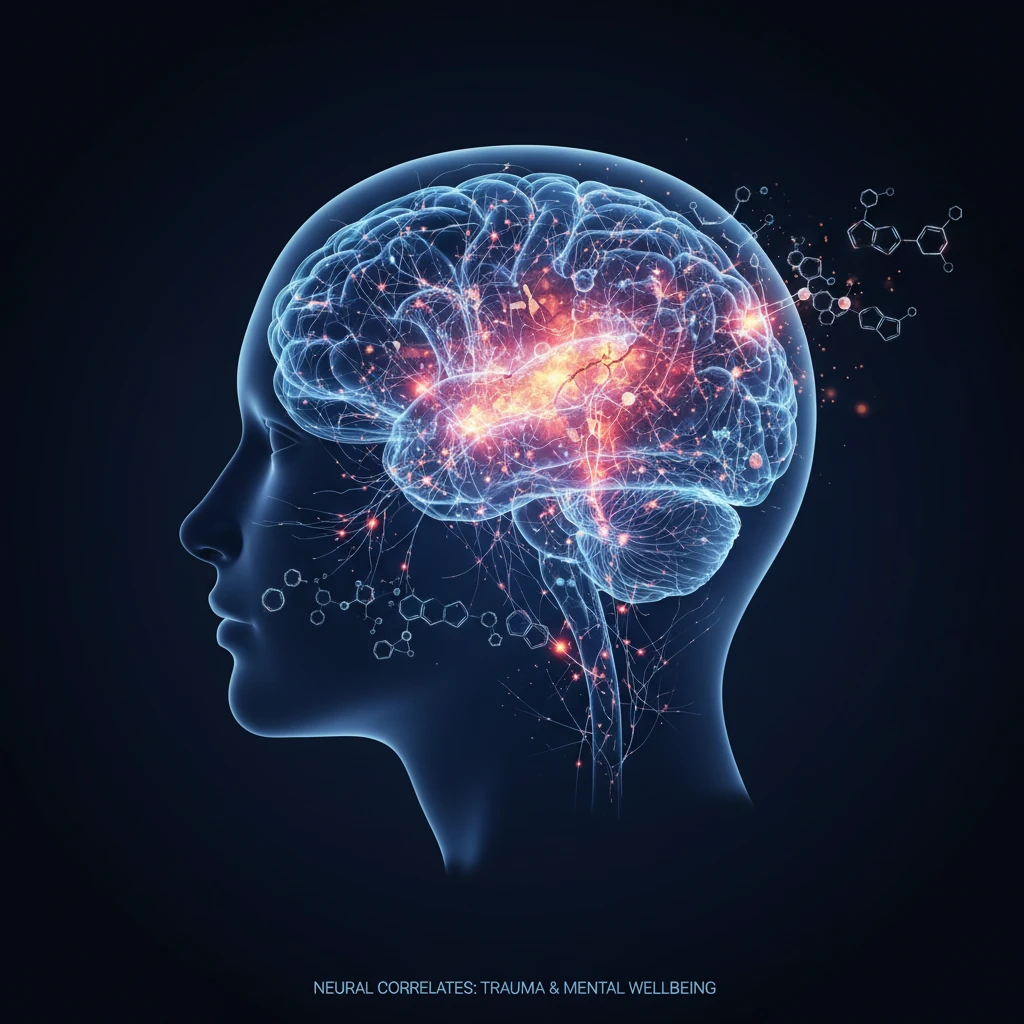
To understand the intricate relationship between trauma and eating disorders, we must first look beyond behavioral symptoms and examine the nervous system. In late 2024, clinical understanding has shifted from viewing eating disorders solely as body image issues to recognizing them as sophisticated, albeit harmful, attempts to regulate a nervous system stuck in a trauma response.
When an individual experiences trauma, the brain’s threat detection center (the amygdala) becomes hyperactive, while the rational processing center (the prefrontal cortex) is often inhibited. This state of hyperarousal (anxiety, panic) or hypoarousal (numbness, shutdown) creates an unbearable internal environment. Disordered eating behaviors often emerge as a chemical intervention:
- Starvation and Anorexia: Restriction can induce a state of emotional numbing. The biological effects of starvation dampen the intensity of emotions and intrusive memories, providing a false sense of calm.
- Binge Eating: The consumption of high-calorie foods triggers a dopamine release, temporarily soothing the hyperaroused nervous system and combating the chronic dysphoria associated with PTSD.
- Purging: The physical act of purging can release endogenous opioids, providing immediate, short-term relief from anxiety and emotional pain.
Eating Disorders as Coping Mechanisms for Trauma
It is crucial to reframe eating disorders not as “choices” but as survival strategies. For many survivors of trauma, the eating disorder functions as a protective shield against overwhelming internal chaos. Statistics from 2024 indicate that up to 75% of individuals in residential eating disorder treatment report a history of trauma, highlighting the necessity of addressing the root cause rather than just the symptoms.
The Function of Control
Trauma, by definition, is an event that overwhelms an individual’s capacity to cope, often involving a complete loss of control over one’s safety or body. In the aftermath, the psyche desperately seeks to re-establish agency. Controlling food intake, weight, and body shape offers a tangible, measurable domain where the survivor feels they have absolute authority. This “pseudo-control” compensates for the lack of control felt in other areas of life or during the traumatic event itself.
Numbing and Emotional Regulation
For those suffering from PTSD, “feeling” can be dangerous. Sensations and emotions are often triggers that lead to flashbacks. Disordered eating behaviors serve as a distraction technique. Obsessing over calories, macronutrients, or the scale occupies the mind, leaving less cognitive space for traumatic memories to intrude. This is often referred to as “cognitive narrowing,” a defense mechanism that keeps the survivor focused on the immediate and physical rather than the abstract and emotional.
Sexual Trauma and Body Dissociation
The link between sexual trauma and eating disorders is particularly strong and complex. When trauma is interpersonal and involves a violation of bodily boundaries, the body itself can become the enemy. Survivors often experience intense shame and a desire to distance themselves from their physical form.
The Body as the “Scene of the Crime”
For survivors of sexual assault, the body may be viewed as the site where the trauma occurred. This can lead to subconscious attempts to alter the body to make it unrecognizable or “safe.”
- Desexualization: Severe restriction may be an unconscious attempt to reverse puberty, stop menstruation, and remove secondary sexual characteristics (breasts, hips) to appear “childlike” and therefore, theoretically, safe from sexual attention.
- Protective Layering: Conversely, Binge Eating Disorder (BED) may lead to weight gain that serves as a physical barrier or “armor” against the world, unconsciously hoping to repel potential abusers.
Dissociation and Interoception
Dissociation—the mental process of disconnecting from one’s thoughts, feelings, memories, or sense of identity—is a hallmark of trauma. In the context of eating disorders, this manifests as a disconnection from interoceptive awareness (the ability to feel hunger, fullness, or physical pain). Survivors may starve themselves because they literally cannot feel hunger, or they may binge until physically ill because they cannot feel satiety. The eating disorder reinforces this dissociation, allowing the survivor to live “in their head” rather than in a body that feels unsafe.

Complex PTSD (C-PTSD) and Emotional Regulation
While PTSD is often associated with a single event, Complex PTSD (C-PTSD) results from prolonged, repeated trauma, often in childhood (such as neglect or chronic abuse). C-PTSD is highly prevalent in the eating disorder population in New Zealand. The core feature of C-PTSD is severe emotional dysregulation.
Individuals with C-PTSD often lack the developmental tools to soothe themselves. Without healthy self-soothing mechanisms, food becomes the primary regulator. The cycle of binging and purging, or starving and exercising, becomes a rhythmic, ritualistic way to manage the intense emotional flashbacks characteristic of C-PTSD.
Trauma-Informed Care Principles in New Zealand
In the New Zealand context, treating eating disorders without addressing the underlying trauma is rarely successful. New Zealand’s mental health sector is increasingly adopting a “Trauma-Informed Care” (TIC) approach. This paradigm shift asks, “What happened to you?” rather than “What is wrong with you?”
The Pillars of Trauma-Informed Care
Effective treatment in NZ facilities adheres to five core principles:
- Safety: Ensuring physical and emotional safety is the priority. This includes avoiding medical interventions that might replicate loss of control (e.g., forced feeding) unless absolutely necessary for life preservation.
- Trustworthiness: Building clear boundaries and consistent care to repair the survivor’s ability to trust.
- Choice: Restoring power to the patient. Treatment plans are collaborative, not dictated.
- Collaboration: Leveling the power dynamic between therapist and client.
- Empowerment: Focusing on the client’s strengths and resilience.
ACC Integrated Services for Sensitive Claims (ISSC)
A unique aspect of the New Zealand landscape is the Accident Compensation Corporation (ACC) coverage for mental injuries caused by sexual abuse (Sensitive Claims). Many individuals struggling with eating disorders stemming from sexual trauma may be eligible for fully funded therapy under the ISSC contract. This allows access to long-term psychotherapy, which is essential for resolving the deep-seated trauma driving the eating disorder.

Advanced Therapies: EMDR and Somatic Approaches
Traditional talk therapy (CBT) is often insufficient for trauma-based eating disorders because trauma is stored in the body and the non-verbal parts of the brain. Modern treatment protocols in 2024/2025 integrate bottom-up processing therapies.
Eye Movement Desensitization and Reprocessing (EMDR)
EMDR is a gold-standard treatment for PTSD and is increasingly used for eating disorders. It works by stimulating the brain’s information processing system (using eye movements or tapping) to reprocess traumatic memories. By neutralizing the emotional charge of past traumas, the “need” for the eating disorder behavior diminishes. EMDR can also be used to target “urge states” and future fears regarding weight gain.
Somatic Experiencing and Sensorimotor Psychotherapy
Since trauma survivors often dissociate from their bodies, somatic therapies focus on bodily sensations rather than just thoughts. These therapies help clients safely reconnect with their physical form, learning to tolerate internal sensations without resorting to eating disorder behaviors. This is critical for relearning hunger and fullness cues.
Internal Family Systems (IFS)
IFS is gaining traction in NZ for treating trauma and EDs. It views the eating disorder not as a pathology, but as a “protector” part of the personality. By engaging with this part with curiosity and compassion, rather than aggression, patients can unburden the trauma that the eating disorder is trying to manage.

The Path to Integrated Recovery
Recovery from a trauma-based eating disorder is non-linear and requires a dual-diagnosis approach. Treating the anorexia or bulimia without treating the PTSD usually leads to relapse, as the coping mechanism is removed while the pain remains. Conversely, diving too deep into trauma work without stabilizing nutritional health can be dangerous.
Integrated recovery involves a multidisciplinary team—psychologists, dietitians, and medical doctors—working in unison. For New Zealanders, leveraging resources like the NZ Eating Disorders Clinic, local DHB services, and ACC-funded therapists provides the best chance for holistic healing. The goal is to move from a place of survival to a place of embodiment, where food is nourishment rather than a weapon, and the body is a home rather than a battleground.
Frequently Asked Questions
Can trauma cause eating disorders?
Yes, trauma is a significant risk factor for developing eating disorders. Traumatic events, especially those occurring in childhood, can dysregulate the nervous system. Eating disorders often develop as a way to cope with the resulting emotional pain, gain a sense of control, or numb distressing feelings associated with the trauma.
What is the most common eating disorder associated with trauma?
While trauma is linked to all types of eating disorders, Bulimia Nervosa and Binge Eating Disorder (BED) show particularly high comorbidity rates with PTSD. However, Anorexia Nervosa is also frequently seen in trauma survivors, particularly those using restriction as a means of control or desexualization following sexual trauma.
How does PTSD affect appetite and eating behaviors?
PTSD keeps the body in a state of “fight or flight,” which releases stress hormones like cortisol and adrenaline. This can suppress appetite (leading to restriction) or, conversely, lead to cravings for high-sugar/high-fat foods (leading to bingeing) as the body seeks quick energy and the dopamine release associated with eating to soothe the nervous system.
Is anorexia a form of self-harm linked to trauma?
Yes, for many trauma survivors, anorexia can function as a form of non-suicidal self-injury. The physical pain of starvation can validate internal emotional pain, punish the body for the trauma endured (especially in cases of sexual abuse), or serve as a slow, passive form of self-destruction driven by trauma-induced shame.
Does EMDR help with binge eating?
Research supports the use of EMDR for binge eating. By processing the underlying traumatic memories that trigger the urge to binge, EMDR reduces the emotional intensity driving the behavior. It can also be used to desensitize specific food triggers and process the feelings of shame that often follow a binge episode.
What support is available in NZ for trauma and eating disorders?
New Zealand offers several avenues for support. Publicly funded services are available through local DHBs. Private specialists often provide integrated care. Crucially, if the eating disorder is linked to sexual abuse, fully funded therapy is available through ACC (Integrated Services for Sensitive Claims). Organizations like EDANZ also provide support for families.