Kaupapa Māori mental health services are indigenous-led healthcare frameworks grounded in tikanga (customs) and te reo Māori. Unlike Western clinical models that often isolate symptoms, these services utilize holistic models like Te Whare Tapa Whā to treat eating disorders by balancing spiritual, physical, family, and mental well-being simultaneously to restore mana and wholeness.
What Are Kaupapa Māori Mental Health Services?
In the landscape of New Zealand’s healthcare system, Kaupapa Māori mental health services represent a vital paradigm shift from the conventional biomedical approach. For individuals struggling with eating disorders (EDs), these services offer a pathway to recovery that aligns with indigenous worldviews, prioritizing the collective over the individual and the holistic over the symptomatic.
Kaupapa Māori services are not merely mainstream services translated into Māori; they are services developed by Māori, for Māori, adhering to the principles of Tino Rangatiratanga (self-determination). In the context of eating disorders—conditions often erroneously stereotyped as affecting only affluent, Western populations—these services provide a culturally safe harbor where identity, genealogy (whakapapa), and spirituality are central to the healing process.
While Western medicine often categorizes eating disorders strictly through the DSM-5 criteria (focusing on weight, caloric intake, and behavioral purging), Kaupapa Māori approaches view these behaviors as a disruption of Mauri (life force) and a disconnection from one’s environment and community. The goal is not just weight restoration, but the restoration of balance across all dimensions of life.
The Philosophy of Whanaungatanga
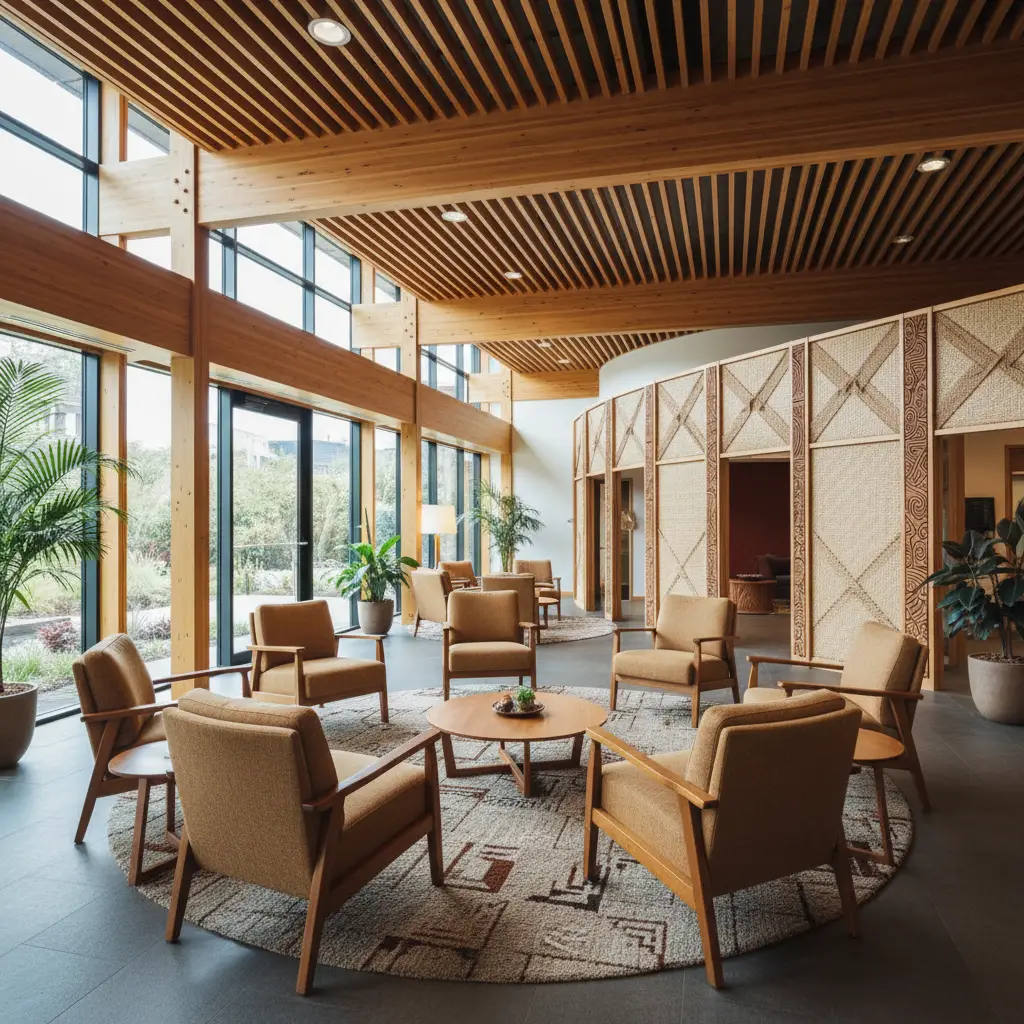
Central to these services is the concept of Whanaungatanga—the process of establishing relationships and relating to others. In a clinical setting, this means the relationship between the healer and the patient is not transactional but relational. For someone with an eating disorder, who often thrives in isolation and secrecy, this emphasis on connection is a powerful antidote. Providers take time to understand the patient’s Whakapapa, locating them within their wider family and tribal structures, rather than viewing them as an isolated case file.
Hauora Māori Models: Te Whare Tapa Whā in Recovery
The most widely recognized framework within Kaupapa Māori mental health services is Te Whare Tapa Whā, developed by Sir Mason Durie. This model compares health to the four walls of a meeting house (wharenui). If one wall is weak or missing, the structure becomes unstable. In the treatment of eating disorders, this model provides a comprehensive map for recovery that extends far beyond food.
Taha Tinana (Physical Health)
While this dimension includes the physical reality of the body, in a Māori worldview, the body is tapu (sacred). Eating disorders often involve a violation of this sacredness through starvation, purging, or harm. Recovery interventions under Taha Tinana focus on honoring the vessel that carries one’s spirit. It moves the conversation from “controlling the body” to “nurturing the whakapapa contained within the body.”
Taha Wairua (Spiritual Health)
Taha Wairua is often the most neglected aspect in standard clinical ED treatment. It involves a connection to the unseen, to ancestors, and to the environment. For many Māori, an eating disorder creates a spiritual void. Treatment involves reconnecting with nature, understanding one’s place in the universe, and finding a sense of purpose that transcends physical appearance. Strengthening Taha Wairua can provide the internal fortitude required to battle the intrusive thoughts of an eating disorder.

Taha Whānau (Family Health)
Eating disorders are often treated as an individual pathology in Western models. However, under Te Whare Tapa Whā, the health of the individual is inextricably linked to the health of the whānau. Kaupapa Māori services often involve the entire family in the treatment process. If the whānau is unwell or disconnected, the individual cannot fully heal. Recovery becomes a collective journey, where food is reintroduced as a medium of connection and hospitality (manaakitanga) rather than a source of fear.
Taha Hinengaro (Mental/Emotional Health)
This relates to the mind, heart, conscience, and thoughts. It acknowledges that the way we think affects how we feel and act. In ED recovery, this wall addresses the dysmorphia and the “eating disorder voice.” However, it frames these struggles not just as neurochemical imbalances but as emotional responses to trauma, colonization, or disconnection. Healing Taha Hinengaro involves expressing emotion through kōrero (talk), toi (art), and waiata (song).
The Critical Role of Cultural Competency in ED Treatment
For Māori and Pasifika seeking help for eating disorders, the lack of cultural competency in mainstream services can be a significant barrier to entry and retention. “Cultural Safety” goes beyond merely understanding cultural differences; it requires the provider to reflect on their own cultural identity and power dynamics.
When a clinician fails to understand the significance of food in Māori and Pasifika cultures—where food is love, connection, and religious observance—dietary prescriptions can feel alienating. For example, a strict meal plan that does not account for communal feasting or traditional foods may set a patient up for failure or social isolation.
Key elements of culturally competent ED care include:
- Pronunciation: Correctly pronouncing names and indigenous terms to show respect (Mana).
- Holistic Intake: Asking about spiritual health and family history in the first session, not just weight history.
- Inclusion of Support Systems: Actively inviting extended family or elders into the consultation room.
- Understanding Body Image Nuances: recognizing that body ideals vary across cultures; for some Pasifika communities, a larger body size is traditionally associated with status and health, creating a complex conflict with Western thin ideals.
Pasifika Health Providers and the Fonofale Model
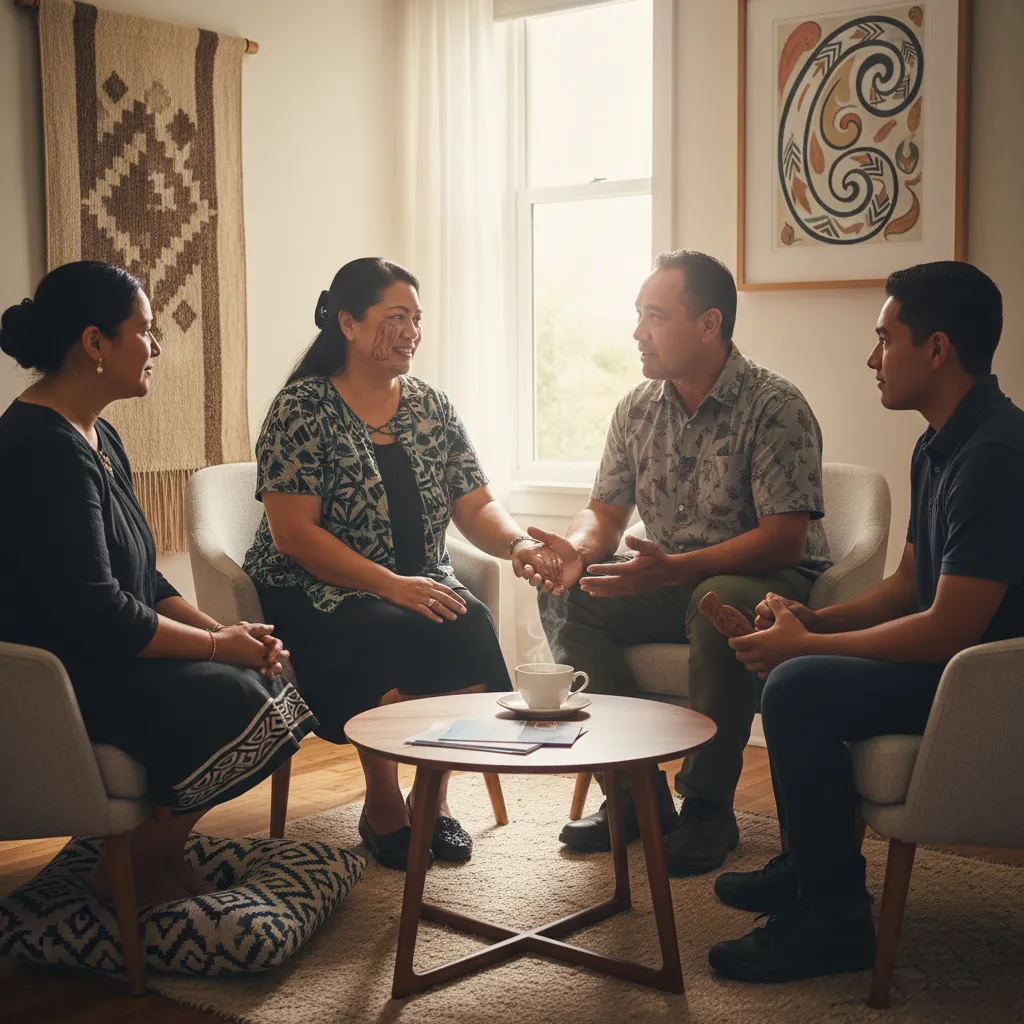
While often grouped with Māori services, Pasifika health providers operate under their own distinct cultural frameworks. The most prominent is the Fonofale Model, created by Fuimaono Karl Pulotu-Endemann. Like Te Whare Tapa Whā, it uses the metaphor of a house (fale) but with specific Pacific dimensions.
- The Roof: Represents culture, which shelters and protects the individual.
- The Foundation: Represents the family, the bedrock of Pasifika life.
- The Pou (Posts): Connect the roof and foundation, representing spiritual, physical, mental, and other variables (gender, sexuality, age, socioeconomic status).
- The Cocoon: The house is encased in an environment involving time and context.
Pasifika providers in New Zealand, such as Le Va or Vaka Tautua, specialize in delivering mental health support that navigates the intersection of NZ-born identities and island-born traditions. In eating disorder recovery, Pasifika providers play a crucial role in addressing the shame often associated with mental illness in Pacific communities, framing recovery as a way to serve the family and community better.
Addressing Cultural Stigma and Barriers to Access
A pervasive myth exists that eating disorders are a “white woman’s disease.” This stereotype is dangerous. Research indicates that Māori and Pasifika populations experience disordered eating at rates equal to or higher than Pākehā, yet they are significantly underrepresented in treatment statistics. This discrepancy is often due to a combination of diagnostic bias and cultural stigma.
Breaking the Silence
In many indigenous communities, mental health struggles are kept private to protect the family’s reputation. Admitting to an eating disorder can be seen as a rejection of the family’s provision (food). Kaupapa Māori and Pasifika providers work tirelessly to destigmatize these conditions. They reframe the narrative: seeking help is an act of warrior-like courage (toarangatira) rather than weakness.
Systemic Barriers
Beyond stigma, logistical barriers prevent access. High costs of private treatment, geographic isolation of rural iwi, and a lack of indigenous clinicians in the public sector contribute to the gap. Kaupapa Māori services are often funded by Te Whatu Ora (Health NZ) to be free or low-cost, removing the financial hurdle. Furthermore, many offer mobile services, visiting marae and homes to reach those who cannot travel to city centers.

Integrating Clinical and Cultural Pathways
The future of eating disorder treatment in New Zealand lies in the integration of clinical excellence with cultural intelligence. It is not a choice between “medical” or “cultural”—effective recovery requires both. Patients should not have to leave their culture at the door to receive life-saving medical intervention.
Collaboration between mainstream hospital services and Kaupapa Māori providers ensures that a patient can be medically stabilized in a hospital while receiving spiritual and whānau support from indigenous practitioners. This dual approach significantly reduces relapse rates by ensuring the recovery is rooted in the patient’s identity and community support system.
People Also Ask
What is the difference between mainstream and Kaupapa Māori services?
Mainstream services typically focus on the biomedical model, treating specific symptoms and pathologies. Kaupapa Māori services are holistic, grounded in Māori values (tikanga), and treat the individual as part of a whānau, addressing spiritual, physical, and family health simultaneously.
How does Te Whare Tapa Whā apply to anorexia recovery?
Te Whare Tapa Whā applies to anorexia by treating the condition as an imbalance in four areas. It addresses physical restoration (Tinana), emotional regulation (Hinengaro), reconnection with family support (Whānau), and restoring spiritual purpose and identity (Wairua) to overcome the disorder.
Are Kaupapa Māori mental health services free?
Many Kaupapa Māori services are funded by Te Whatu Ora (Health New Zealand) and are free for eligible residents. However, some private practitioners or specific programs may have associated costs. It is best to check directly with the specific provider.
Can non-Māori access Kaupapa Māori services?
Yes, most Kaupapa Māori services are inclusive and open to everyone. While the framework is Māori, the holistic, whānau-centered approach is beneficial for people of all backgrounds who prefer a more integrated model of care over a purely clinical one.
What is the Fonofale model of health?
The Fonofale model is a Pasifika health framework using the metaphor of a Samoan house (fale). It incorporates family (foundation), culture (roof), and posts representing physical, spiritual, and mental dimensions, all encased in the context of time and environment.
How do I find a culturally safe therapist in NZ?
You can find culturally safe therapists by searching directories like the NZ Psychologist Board or specific provider networks like Le Va. Ask potential therapists about their experience with cultural competency, their understanding of Te Whare Tapa Whā, and their willingness to include whānau in treatment.