Neurodivergent eating disorders refer to the complex intersection of feeding challenges and conditions like Autism (ASD) and ADHD. Unlike traditional eating disorders driven primarily by body image, neurodivergent feeding issues often stem from sensory processing differences, executive dysfunction, and difficulties with interoception, requiring specialized, neuro-affirming recovery models.
What is the Intersection of Neurodivergence and Feeding Issues?
For decades, the clinical understanding of eating disorders was viewed predominantly through a lens of psychological distress regarding weight and shape. However, modern research and the lived experiences of the neurodivergent community have revealed a significant overlap between neurodivergence—specifically Autism Spectrum Disorder (ASD) and Attention Deficit Hyperactivity Disorder (ADHD)—and disordered eating behaviours.
The intersection is not merely coincidental. Studies suggest that a substantial percentage of individuals presenting with Anorexia Nervosa or Bulimia also meet the diagnostic criteria for autism. Furthermore, ADHD is frequently comorbid with Binge Eating Disorder (BED) due to the brain’s search for dopamine stimulation. Understanding this intersection is critical for effective treatment, particularly within the New Zealand healthcare context where waitlists for specialized care can be long, and misdiagnosis is a risk.
Neurodivergent individuals often experience food differently. It is not always a battle against calories; it is often a battle against biology. The texture of a mushroom, the brightness of the kitchen lights, or the overwhelming cognitive load required to decide what to cook can all act as barriers to adequate nutrition.
Avoidant/Restrictive Food Intake Disorder (ARFID)
One of the most prominent diagnoses at this intersection is Avoidant/Restrictive Food Intake Disorder (ARFID). Unlike Anorexia, ARFID is not driven by a fear of weight gain. Instead, it is characterized by a lack of interest in eating, an avoidance based on sensory characteristics of food, or concern about aversive consequences of eating (such as choking or vomiting).
For the neurodivergent mind, ARFID is often a protective mechanism. If the world feels chaotic and loud, “safe foods” (often bland, consistent textures like crackers or white bread) provide a sense of control and predictability. Recognizing ARFID as a sensory and regulatory issue rather than a behavioural refusal is the first step in neuro-affirming care.
Sensory Processing vs. Body Image: Distinguishing the Drivers
A critical failure in traditional eating disorder treatment for neurodivergent patients is the assumption that food restriction is always rooted in body dysmorphia. While neurodivergent individuals can and do experience body image distress, their feeding challenges are frequently driven by Sensory Processing Disorder (SPD).
The Sensory Experience of Eating
Eating is a multisensory experience involving sight, smell, touch, taste, and even sound. For a neurotypical brain, these inputs are integrated seamlessly. For a neurodivergent brain, they can be agonizingly intense.
- Texture Aversion: Mixed textures (like stews or yoghurt with fruit pieces) can trigger a gag reflex. This is not “picky eating”; it is a visceral physiological rejection.
- Visual Overwhelm: Too many colours on a plate or foods touching each other can cause cognitive overload, leading to appetite suppression.
- Auditory Sensitivity: The sound of others chewing or the clatter of cutlery can trigger misophonia, causing a fight-or-flight response that shuts down the digestive system.
When clinicians attempt to treat these sensory aversions with standard exposure therapies designed for body image anxiety, it can cause significant trauma. Forcing a patient with sensory processing differences to eat a “fear food” that physically pains them does not lead to habituation; it leads to further withdrawal and distrust of the treatment team.

How Executive Function Challenges Impact Meal Prep
Executive function refers to the set of mental skills that include working memory, flexible thinking, and self-control. These are the skills we use every day to learn, work, and manage daily life. For those with ADHD and Autism, executive dysfunction is a core feature that creates massive hurdles in maintaining a regular eating schedule.
The Hidden Complexity of “Just Making Dinner”
To a neurotypical person, making a sandwich is a simple task. To a neurodivergent individual struggling with executive dysfunction, it is a multi-step mountain:
- Planning: Deciding what to eat (decision paralysis).
- Inventory: Checking if ingredients exist.
- Procurement: Going to the supermarket (sensory hell).
- Initiation: Getting off the couch to start (task paralysis).
- Execution: The sequencing of cooking steps.
- Cleanup: The aftermath.
When this chain breaks at any link, the result is often skipping the meal entirely. This is not starvation for weight loss; it is starvation due to administrative failure of the brain. This is often why “girl dinner” or reliance on processed snacks becomes a survival strategy for neurodivergent adults.
ADHD and the Dopamine Menu
For those with ADHD, food is also a source of dopamine. This can lead to a cycle of binge eating or grazing on high-sugar, high-carb foods to stimulate the brain. Conversely, if a food is not “interesting” enough (i.e., it doesn’t provide a dopamine hit), the brain may refuse to initiate the eating process, leading to inadvertent restriction.

The Role of Interoception in Hunger Cues
Interoception is the “eighth sense”—the ability to perceive sensations arising from within the body, such as hunger, thirst, heartbeat, and a full bladder. Research indicates that neurodivergent individuals often struggle with interoceptive awareness.
The “Hungry/Full” Disconnect
Many autistic people and ADHDers do not feel hunger until they are starving (hypo-sensitivity) or feel full after only a few bites (hyper-sensitivity).
In the context of ADHD hyperfocus, a person might work for 10 hours straight, completely unaware that they haven’t eaten, only to crash later with a severe headache and irritability (the “hangry” state). In recovery, relying on “intuitive eating”—which tells patients to listen to their body—can be ineffective or even dangerous if the body’s signals are muted or scrambled. Mechanical eating (eating by the clock rather than the feeling) is often a necessary bridge in neurodivergent recovery.
What are Neuro-affirming Care Models?
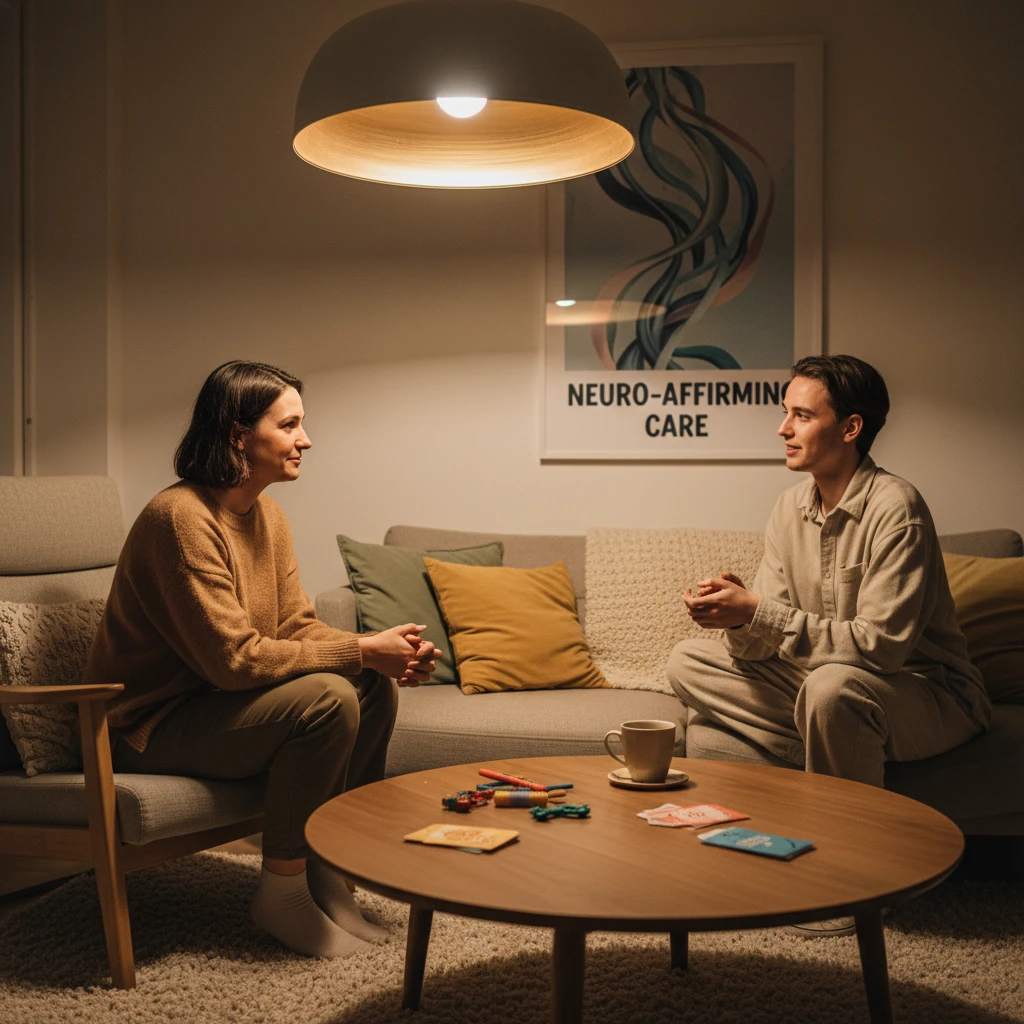
Neuro-affirming care is a paradigm shift in the New Zealand mental health and dietetic landscape. It moves away from the “compliance-based” models that seek to make neurodivergent people behave like neurotypical people, and instead focuses on accommodation, autonomy, and quality of life.
Key Principles of Neuro-affirming Treatment
- Validating Sensory Needs: Instead of forcing variety for the sake of variety, treatment focuses on expanding the “safe food” list laterally (e.g., if you like crunchy salty crackers, let’s try crunchy salty pretzels) rather than vertically (jumping from crackers to boiled broccoli).
- Environment Modification: Reducing sensory input during mealtimes. This might mean eating alone, wearing noise-cancelling headphones, or using weighted lap pads to regulate the nervous system while eating.
- Removing Moral Value from Food: Understanding that a fed person is better than a “perfectly” fed person. If a pre-packaged meal is the only thing executive function allows, that is a victory, not a failure.
- Communication Adaptations: Using direct language, visual schedules, and avoiding abstract metaphors in therapy sessions.
Practical Strategies for Recovery and Support
For whānau (family) supporting a loved one, or individuals navigating this themselves, practical adjustments can make a profound difference.
For the Individual
1. Externalize the Cues: Do not rely on your stomach to tell you when to eat. Set alarms on your phone for morning tea, lunch, and afternoon tea. Treat eating like taking medication—it is a scheduled maintenance task.
2. Reduce Friction: Keep non-perishable safe foods visible and within arm’s reach. If you have to open a cupboard and move a box to get food, you might not eat it. Visual cues are essential.
3. The “Fed is Best” Mentality: Release the guilt associated with convenience foods. Frozen vegetables, protein shakes, and meal delivery kits are valid tools for managing executive dysfunction.
For Clinicians and Whānau
When treating neurodivergent eating disorders, patience is the primary tool. Pressuring a sensory-averse individual to eat can trigger a meltdown, which sets recovery back. In New Zealand, seeking out dietitians and psychologists who explicitly state they are “neuro-affirming” or experienced with ASD/ADHD is crucial. The goal is not to fix the neurodivergence, but to nourish the body in a way that respects the brain’s unique wiring.
Recovery is possible, but it looks different for everyone. It requires a departure from rigid food rules and an embrace of flexibility, sensory accommodation, and radical self-compassion.
Why are eating disorders common in neurodivergent people?
Eating disorders are common in neurodivergent people due to a combination of sensory processing sensitivities (textures, smells), executive dysfunction (difficulty planning and preparing meals), and difficulty interpreting interoceptive cues (hunger and fullness signals). Additionally, the need for control and routine common in autism can manifest as rigid eating habits.
What is the difference between ARFID and Anorexia?
The primary difference is the motivation behind the restriction. Anorexia Nervosa is driven by a fear of weight gain and body image distortion. ARFID (Avoidant/Restrictive Food Intake Disorder) is driven by sensory aversion, lack of interest in food, or fear of adverse consequences like choking, without the focus on body weight or shape.
How does ADHD affect eating habits?
ADHD affects eating habits through impulsivity (binge eating for dopamine), inattention (forgetting to eat), and executive dysfunction (struggling to shop and cook). Medication for ADHD can also suppress appetite during the day, leading to bingeing in the evening when the medication wears off.
Can you have both autism and anorexia?
Yes, comorbidity is high. Research suggests that up to 20-30% of people with anorexia may also be autistic. The starvation state can exacerbate autistic traits like rigidity and social withdrawal, making diagnosis and treatment complex.
What is neuro-affirming care?
Neuro-affirming care is a therapeutic approach that respects and accommodates neurodivergent differences rather than trying to “cure” them. In eating disorder treatment, this means adapting meal plans to sensory needs, using direct communication, and acknowledging that health looks different for neurodivergent individuals.
How can I help a neurodivergent child with eating issues?
Focus on reducing sensory overwhelm at mealtimes, allow “safe foods” to ensure caloric intake, establish a low-pressure routine, and avoid power struggles over food. Consult with a paediatric dietitian or occupational therapist who specializes in sensory processing and feeding.